

Venture capital: Time to invest?
Executive summary
- Venture capital (VC) is a financing method where capital is invested in startups or young businesses with high growth potential in exchange for ownership shares
- VC investments are typically higher risk but offer the potential for outsized returns, often relying on a few successful investments to drive overall portfolio performance
- The VC industry has seen significant growth, with assets under management (AUM) at USD 1.4tn (Dec 2025). North America remains the dominant region for VC activity, although interest is growing in emerging markets
- The fundraising market has remained constrained, but conditions could ease in 2026. Deal values have grown, and the exit market has strengthened, driven by growth of VC secondaries
- For knowledgeable and experienced investors with the appropriate risk tolerance, it could be an opportune time to invest in VC, as valuation corrections and AI-driven growth enable access to top-performing managers and quality companies at favourable prices
VC: Back to basics
If you’ve ever used Anthropic’s Claude, made a payment on Revolut, or bought clothes from Shein, you will have used services and products from venture capital-backed companies.
Venture capital (“VC”) is a form of financing where capital is invested into a company – generally a startup, young business or sometimes a larger business – in exchange for an ownership stake in the company. VC firms (General Partners “GPs”) raise funds from investors called Limited Partners (“LPs”) to invest in emerging companies that they believe have exceptional long-term potential. Beyond providing capital, GPs support companies through their networks to build teams and develop the company’s products or services.
VC-backed companies can exhibit high growth potential and both the GP and the LP benefit if the company does well. The companies receiving the capital will generally invest it into their business in various ways to help support growth: for example, build teams to target a new market, or invest in sales, technology or product development.
VC-backed companies aim to apply cutting-edge technologies like AI to offer innovative products or services across industries.
Most startups face significant challenges, including product development, customer adoption, market evolution, and financing risks. Consequently, many startups fail in the early stages. Venture strategies seek to offset these losses through well-diversified portfolios with outsized returns from a core of highly successful investments.
There are many prominent VC firms with experienced teams and a long-term track record of successfully selecting winning investments with the potential to deliver attractive returns to investors.
VC and private equity buyouts: What’s the difference?
Both VC and private equity (PE) buyouts share the same goal: to increase the value of companies they invest in before selling their stake for a profit. However, they differ in fundamental ways:
- Types of companies
VCs seek to invest in startups companies, or those in their relative infancy. The company can be as early stage as a small team with a business plan and no assets or cashflow. VC funding gives them access to vital capital and GPs can also share expertise, experience and network informally or via a board seat, to support companies. In PE buyouts, GPs invest in more established companies that are usually profitable with steady, but improvable profit margins or cashflows - Risk profile
VC investments are generally higher risk, with both the potential for higher relative returns and an increased chance of failure. As such, the loss ratios are higher in VC than in PE buyouts. Young companies are often still developing and refining products or services. They may be in immature or new markets and could be operating in an unproven technology. Given these characteristics, VC typically has higher risk and higher return potential than PE buyouts. As a result, venture portfolios tend to be well-diversified with managers typically seeking a handful of ‘home run’ investments that can generate the majority of fund returns, commonly referred to as the ‘Power Law’ - Ownership stake
VC managers often take minority stakes – 50 per cent or less – when making an initial investment to gain access to the most attractive companies and potential ‘pro-rata’ rights in subsequent rounds. Although there’s no ‘controlling’ investor as seen within PE, the VC managers with the biggest ownership positions typically sit on the company board and are part of strategic and growth discussions - Team construction
VCs are much smaller and nimbler, allowing them to move quickly. Investors typically employ a thesis-driven sourcing approach and are encouraged to take calculated risks to uncover outliers, often without the need for formal voting processes. Unlike PE buyouts, where operational efficiency is key to value creation, VCs focus on offering access to networks, strategic guidance and mentorship to help fuel growth - Holding periods
As VC managers invest in less mature companies, holding periods are typically longer than PE buyouts, however, the potential for outperformance and compounding returns can make it worth the wait. Successful VC-backed companies are typically exited through the public markets via IPO or through a sale to a larger, strategic company - Fund fees
Finally, VC GPs operate in the same way as other private market fund managers, in that they charge management and performance fees. These fees can be higher than the PE buyout industry standard 2 per cent management fee and 20 per cent performance fee (over a specified hurdle rate) due to expected outperformance. Management fees are typically calculated as a percentage of aggregated committed capital within a fund and performance fees are calculated as a percentage of the profits from investing. These performance fees incentivise managers to deliver higher returns and are generally paid out to employees to reward their investment successes
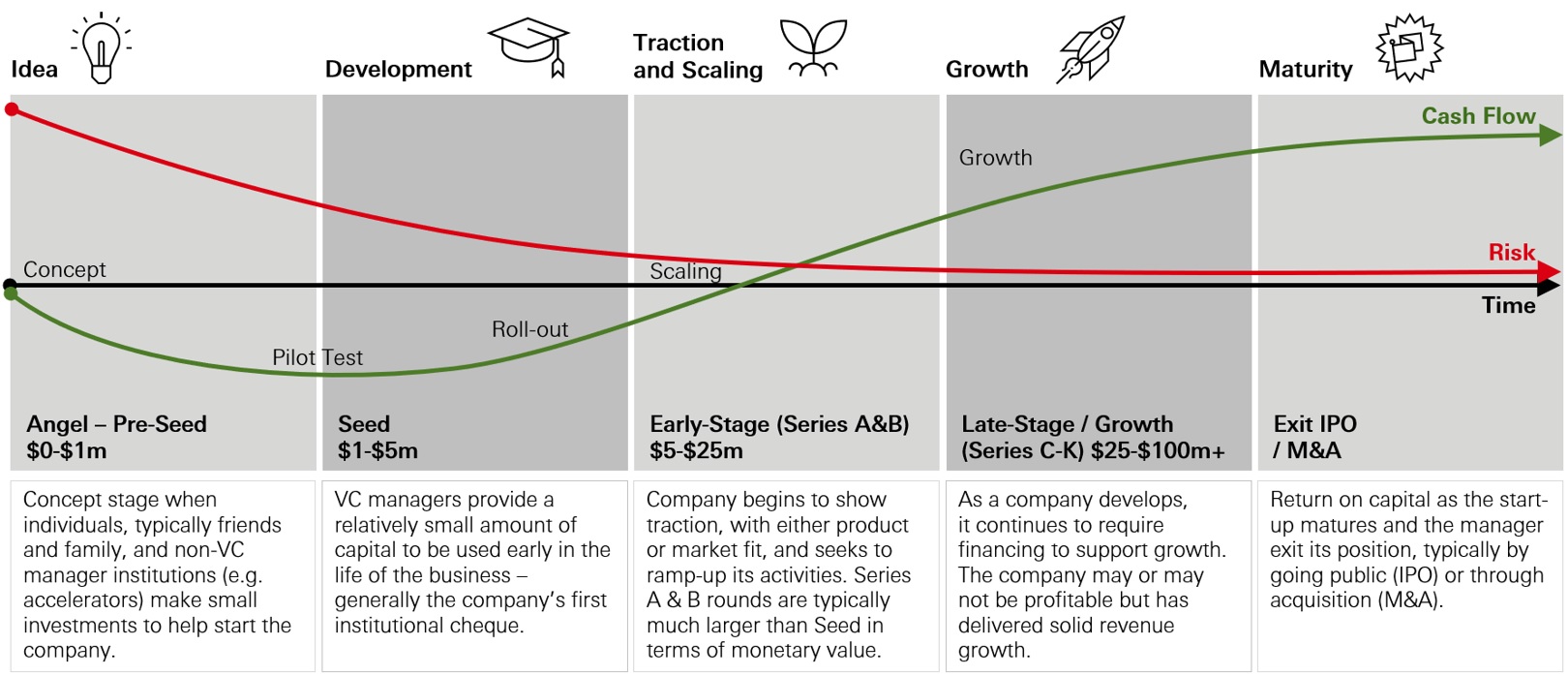
Figure 1: The venture capital cycle
Click to enlarge
Source: HSBC Asset Management, HSBC Global Private Banking, May 2026.
Note: Conceptual illustration based on industry data and statistics.
The stages of VC fundraising
As startups grow and develop, they will require financing from VC fund managers to support the growth. This happens through fundraising rounds across different stages from angel/seed to late stage, as described below. After the seed round, fundraising rounds are called “Series” and are labelled alphabetically (e.g. Series A, Series B etc.) With each Series, the fundraising rounds typically increase in size, as does the valuation of the company.
In a fundraising round, companies may seek new VC fund managers to diversify the investor base and seek new investors that can provide additional support, for example, through their networks. The new fundraising round will also provide an opportunity for existing investors to provide additional – or follow-on – capital to the company. Some VC fund managers may specialise in specific stages, and others may invest across all stages, the latter known as multi-stage managers.
Angel and pre-seed stage
This is the initial concept stage when individuals, typically friends and family, and non-VC manager institutions (e.g. accelerators) make small investments to help start the company.
 |
Seed stage
|
 |
Early stage
|
 |
Late stage/Growth |
Exploring the global VC market
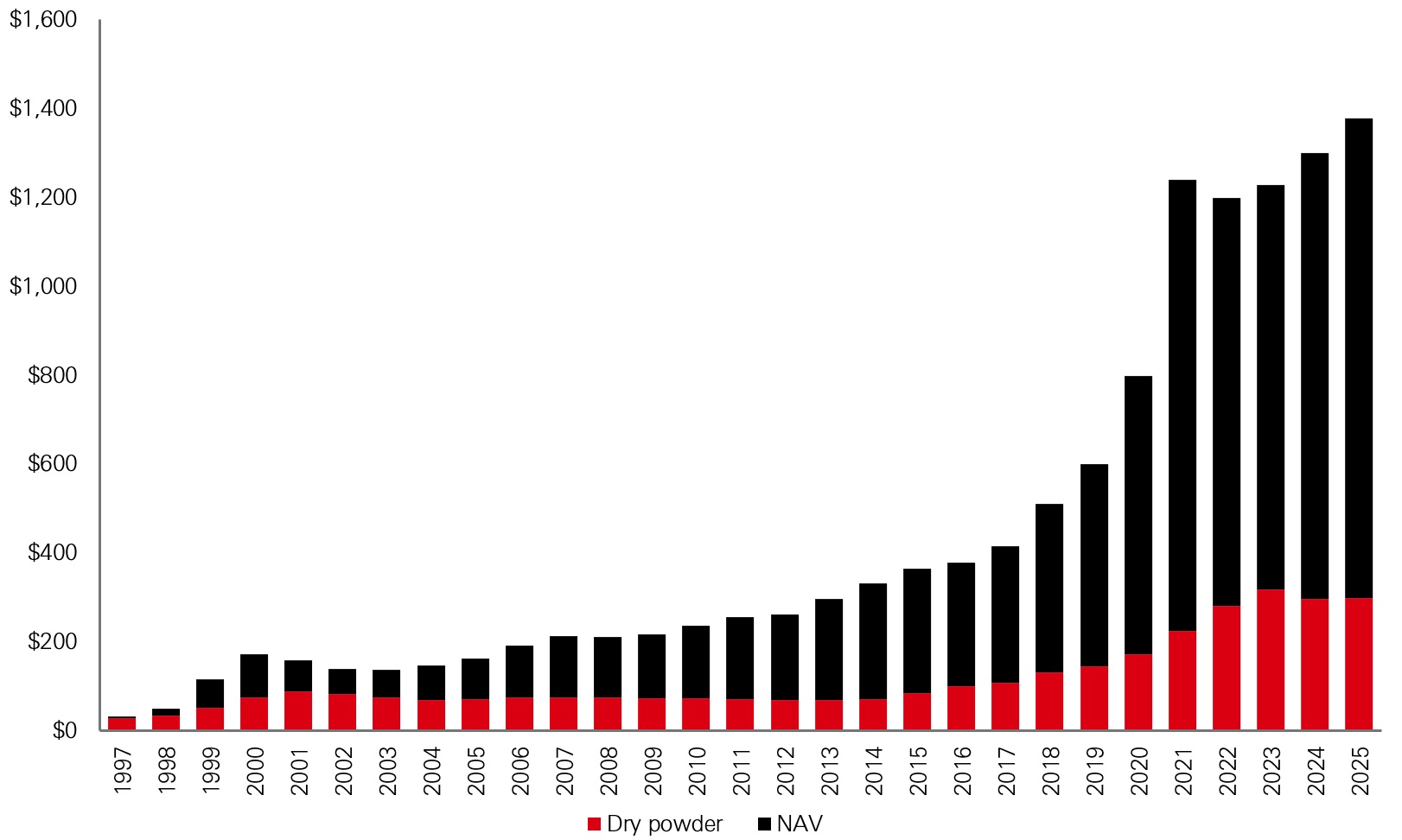
The VC industry has been a major beneficiary of the growth in private capital markets, particularly in recent years. Between 2015 and the end of 2025, US VC AUM (NAV + Dry Powder) increased from USD 363.8bn to USD 1.4tn, according to PitchBook, an annualised increase of 14.2 per cent. While the rate of growth in the asset class slowed after 2021, VC could well remain the fastest growing asset class within private capital markets.
Figure 2: Venture capital AUM by primary region focus
Click to enlarge
Source: PitchBook, as of Dec 2025
Past performance does not predict future returns. This information shouldn’t be considered as an investment advice. The views expressed above were held at the time of preparation and are subject to change without notice. Any forecast, projection or target where provided is indicative only and is not guaranteed in any way. HSBC Asset Management accepts no liability for any failure to meet such forecast, projection or target.
VCs tend to invest in areas where there is massive potential for disruption and scalability, such as AI, healthcare, climate tech, and fintech. Generative AI is likely the defining investment theme of this decade and dominates the VC landscape today. Large language models continue to see the majority of AI funding, along with AI development tools.
North America attracts the most VC funding today. Of the USD 1.2tn in VC capital raised globally in 2025, 55.3 per cent was raised in North America, compared to 30.6 per cent in Asia, and 10.7 per cent in Europe. That said, VC fund managers are expanding their horizons beyond traditional technology hubs such as Silicon Valley, including London, Berlin, Beijing, and Singapore.
Over the forecast horizon, which runs from 2025-2030, PitchBook expects VC AUM to reach USD 3.9tn in the base case and USD 5.5tn in the upside scenario, up from USD 3.6tn at the end of 2025. Among the attractions driving interest in VC markets are access to cutting-edge technologies and market disruptors while they are in the nascent stage, something traditional asset classes cannot provide.
Accessing VC
Investors can access VC through various routes offering different risk-return profiles:
- Primary funds involve committing capital directly to a VC fund at its inception, which then deploys that capital into a portfolio of early-stage companies over several years offering full exposure to the fund’s strategy but with a longer investment horizon and the ‘J-curve’ pattern of returns
- Secondary funds involve purchasing existing stakes in a fund or portfolio companies, often at a discount. This allows investing in more mature companies with more visibility into underlying holdings and can accelerate distributions and shorten the J-curve
- Co-investments allow investors to invest directly into a company alongside a VC fund, typically on a deal-by-deal basis and often with reduced fees, offering more concentrated and targeted exposure
- Fund of funds pool capital to invest across multiple underlying VC funds, providing broad diversification by manager, vintage, and stage into a single commitment, useful for investors seeking VC exposure that don’t have the resources to select and monitor individual GPs, though this comes with an additional layer of fees
VC trends in 2026
Fundraising markets continue to be subdued
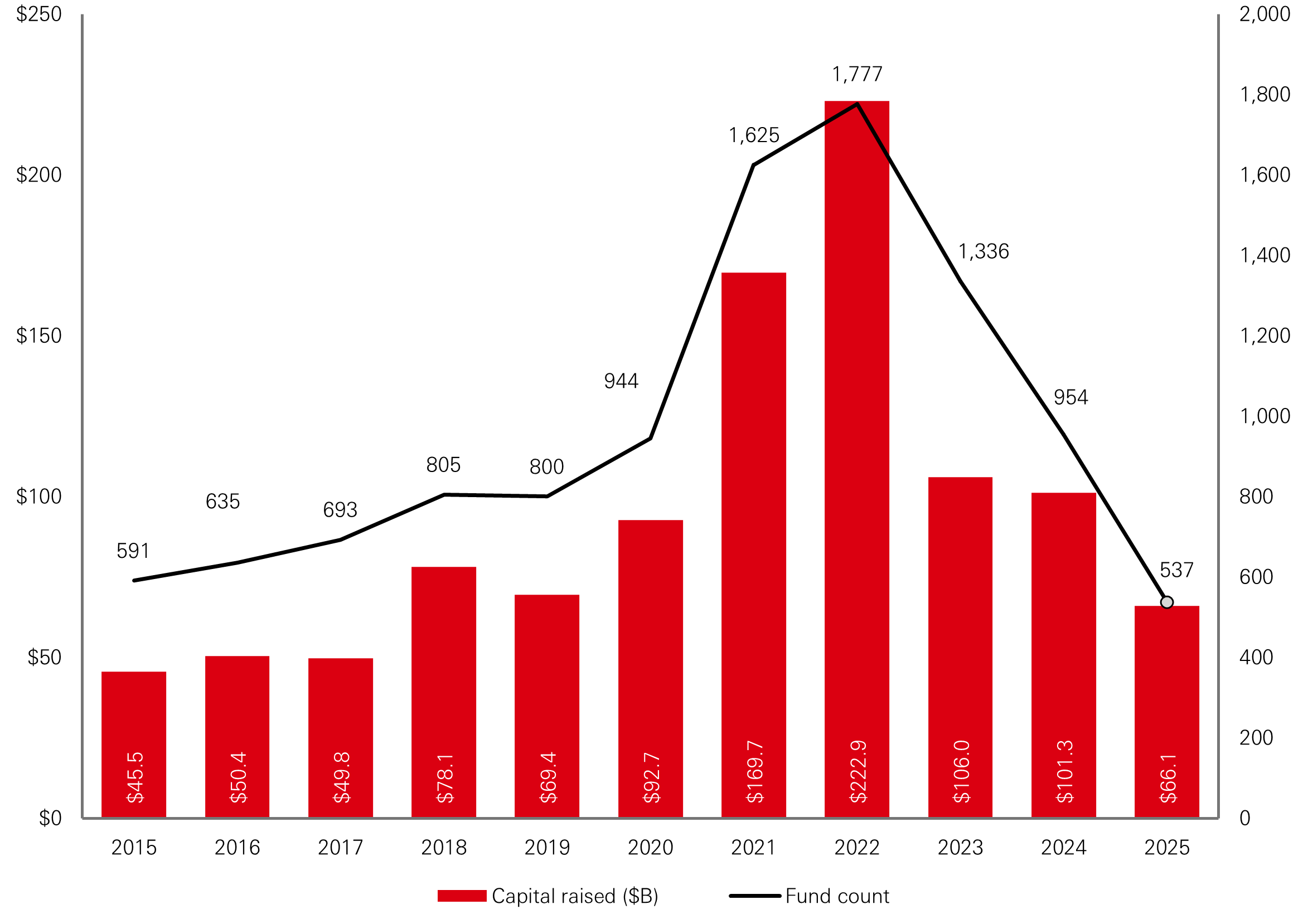
The US VC fundraising market has been on a declining trend since 2022. In 2024, 954 VC funds closed, raising a combined USD 101.3bn, according to PitchBook data. In 2025, this fell to just 537 funds raising USD 66.1bn – the quietest year since 2017.
Figure 3: US VC fundraising activity
Click to enlarge
Source: PitchBook, data as of Dec 2025. Past performance does not predict future returns
For illustrative purposes only. There is no guarantee that the trend illustrated by the chart above will continue. Past performance does not predict future returns. The views expressed above are the views of the author which were held at the time of preparation and are subject to change without notice. This information shouldn’t be constituted as an investment advice.
The slowdown has been driven by elevated interest rates, constrained risk appetite resulting from geopolitical uncertainties and US tariffs, and a muted M&A and IPO environment. This provides an opportunity to gain access to top-performing managers that may otherwise have been difficult to access.
The good news for the market is that distributions from recent IPOs could boost cashflows back to LPs in 2026, and the outlook for liquidity is brighter than in recent years.
Irrespective, the top performing venture capital funds will continue to raise funds, even in tougher fundraising environments. In fact, according to PitchBook, 21.9 per cent of global VC commitments in 2025 were closed by just 10 funds, the highest proportion since 2012. Indeed, tough fundraising environments tend to lead to outperformance as the best managers can choose the best opportunities at more attractive valuations.
Deal values grow but concentrated in a few megadeals
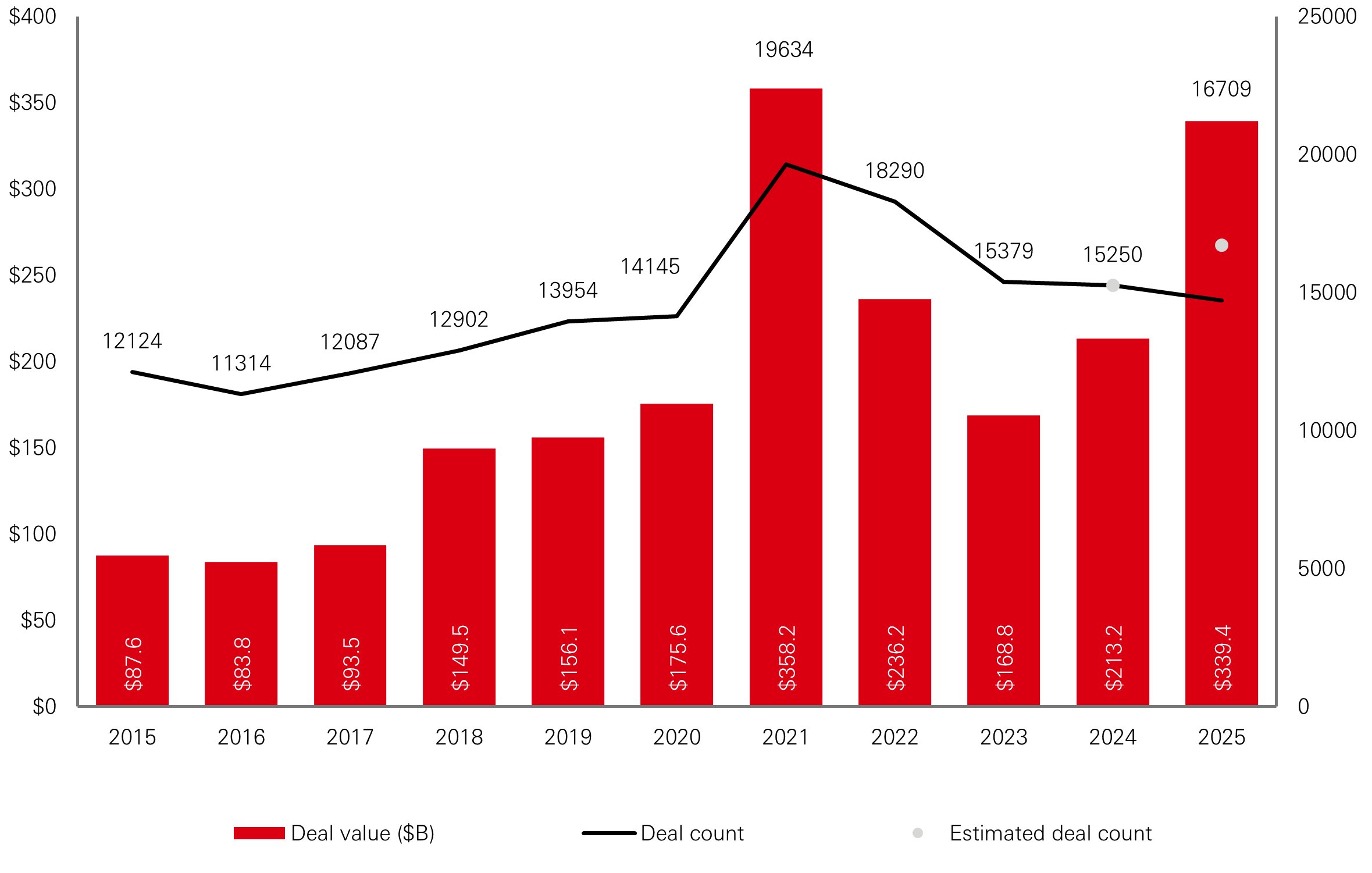
In 2025, deal activity began a phase of re-growth, with deal count estimates showing increases at each stage. Deal value hit the highest since 2021 (falling just 8 per cent short of the 2021 figure), though heavily concentrated in a small number of deals.
Figure 4: US VC deal activity
Click to enlarge
Source: PitchBook, data as of December 2025
Past performance does not predict future returns. For illustrative purposes only. There is no guarantee that the trend illustrated by the chart above will continue. Any forecast, projection or target where provided is indicative only and is not guaranteed in any way. HSBC Asset Management accepts no liability for any failure to meet such forecast, projection or target.
First financings are estimated to nearly hit the highs of 2021, as are early-stage funding rounds, both of which indicate high investor appetite for developing companies. The other stage showing significant growth year-on-year is venture growth, driven by mega companies attracting a lot of capital. While deal growth at this stage is a net positive for the market, further capital raises at this stage signal extension of liquidity cycles.
AI has been the defining theme, accounting for 65.4 per cent of deal value and 39.4 per cent of deal count in 2025 (‘PitchBook NVCA Venture Monitor Q4 2025’, PitchBook NVCA (2025)). We expect AI related investments continue to dominate, as AI continues to penetrate the economy and new use cases are developed.
We expect VC deal activity to remain robust in 2026. Recovering M&A and IPO markets should support investor confidence and deployment. While mega-rounds will likely keep drawing a large share of VC capital, the renewed emphasis on seed and Series A is a positive signal, pointing to a fresh pipeline of innovation and future category leaders.
Improving exits and distributions
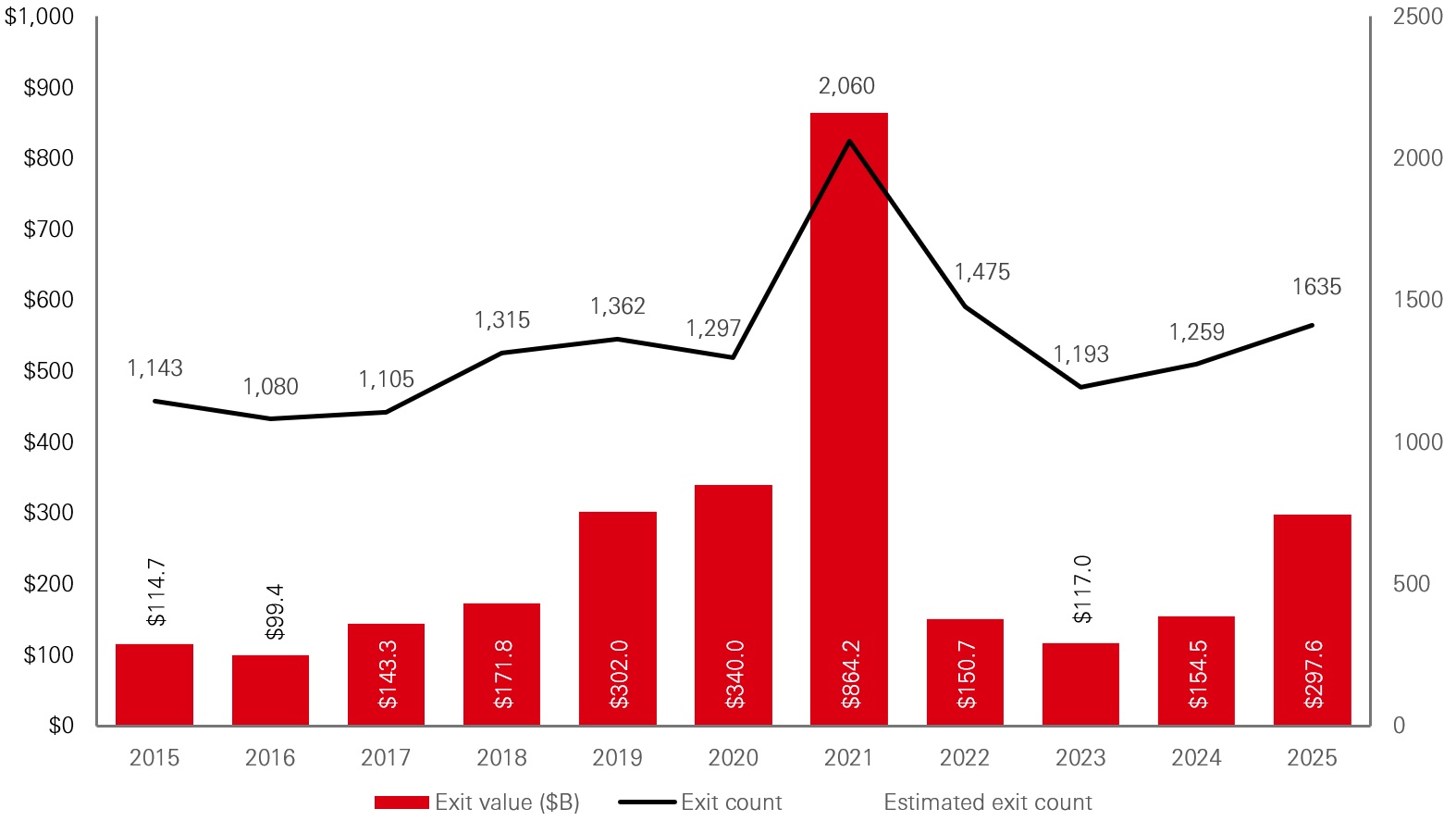
Exit activity improved in 2025 but fell short of the rebound that many had hoped for. According to PitchBook, it was the second-most-active year by exit count and the fourth by exit value (after 2019, 2020, and 2021), generating USD 297.6bn across an estimated 1,635 exits. However, the market needs more large exits to fill the liquidity gap, especially because unicorn valuations have grown more than sixfold since 2019, but windfalls remain few and far between.
PitchBook reports that in 2025, 17 unicorns went public with much fanfare, though the total IPO count remained muted at 48 listings, similar to the levels of other post-pandemic years. A shifting policy landscape constrained exit momentum in 2025. Tariff negotiations, a prolonged government shutdown, and a volatile public market complicated the road to IPO as companies struggled with pricing and timing uncertainty.
Figure 5: US VC exit activity
Click to enlarge
Source: PitchBook, data as of December 2025. Past performance does not predict future returns
For illustrative purposes only. There is no guarantee that the trend illustrated by the chart above will continue. Past performance does not predict future returns. The views expressed above are the views of the author which were held at the time of preparation and are subject to change without notice. This information shouldn’t be constituted as an investment advice.
VC fund managers continue to seek creative ways to provide liquidity to their LPs, including through direct secondaries sales or continuation funds. There was a clear inflection point for venture secondaries in 2025, driven in part by a wave of Wall Street acquisitions of established secondaries platforms and investors, which solidified secondaries as a growth driver and an essential bridge between private and public markets.
The US VC secondary market across direct and GP-led stakes reached an estimated USD 94.9bn in annual value as of Q3 2025 and has been steadily catching up to IPOs and acquisitions (‘Q3 2025 US VC Secondary Market Watch’, PitchBook (2025)).
With returning investor appetite in 2025, there is cautious optimism that 2026 will continue the recovery in VC exits. There may be a few breakout IPOs in 2026 that will generate significant returns for investors, but public listings are expected to remain highly selective.
Valuation and performance
VC valuations have reset
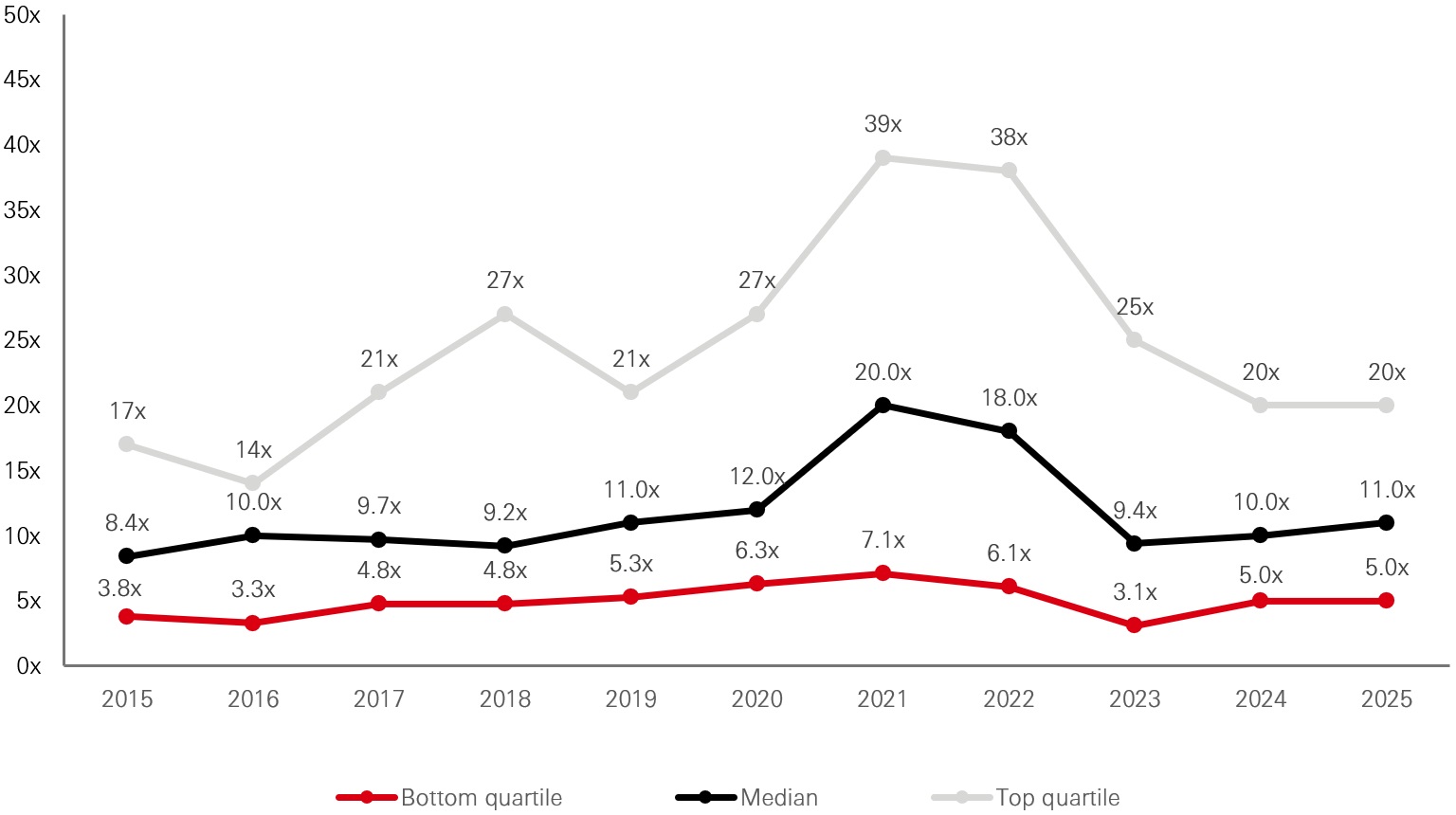
Following the exuberance of 2021, VC valuations have undergone a meaningful correction. This reset has restored discipline to the market, allowing investors to access high-quality companies at more attractive entry points. History suggests that capital deployed after such corrections is often well positioned to deliver robust vintage year returns.
Figure 6: VC post-money valuation by quartile (2015-2026 YTD)
Click to enlarge
Note: Bottom quartile, median and top quartile per year. The shaded band is the inter-quartile range.
Source: ‘What private companies are actually worth: How the multiple moves with the cycle’, Dealroom.co (2026).
There is no guarantee that the trend illustrated by the chart above will continue.
Past performance does not predict future returns. The views expressed above are the views of the author which were held at the time of preparation and are subject to change without notice. This information shouldn’t be constituted as an investment advice. Any forecast, projection or target where provided is indicative only and is not guaranteed in any way. HSBC Asset Management accepts no liability for any failure to meet such forecast, projection or target.
Early-stage, VC-backed companies offer potential for exponential growth as they scale rapidly and capture market share. Hence, VC funds managed by experienced investors in this space often generate returns that can exceed traditional asset classes.
VC-backed companies can benefit from long-term compounding growth. The longer hold periods tend to result in more favourable multiple returns as managers often exercise ‘pro-rata’ rights to ‘double-down’ on winners. Consequently, VC has generated compelling returns relative to public markets over multiple economic and investment cycles.
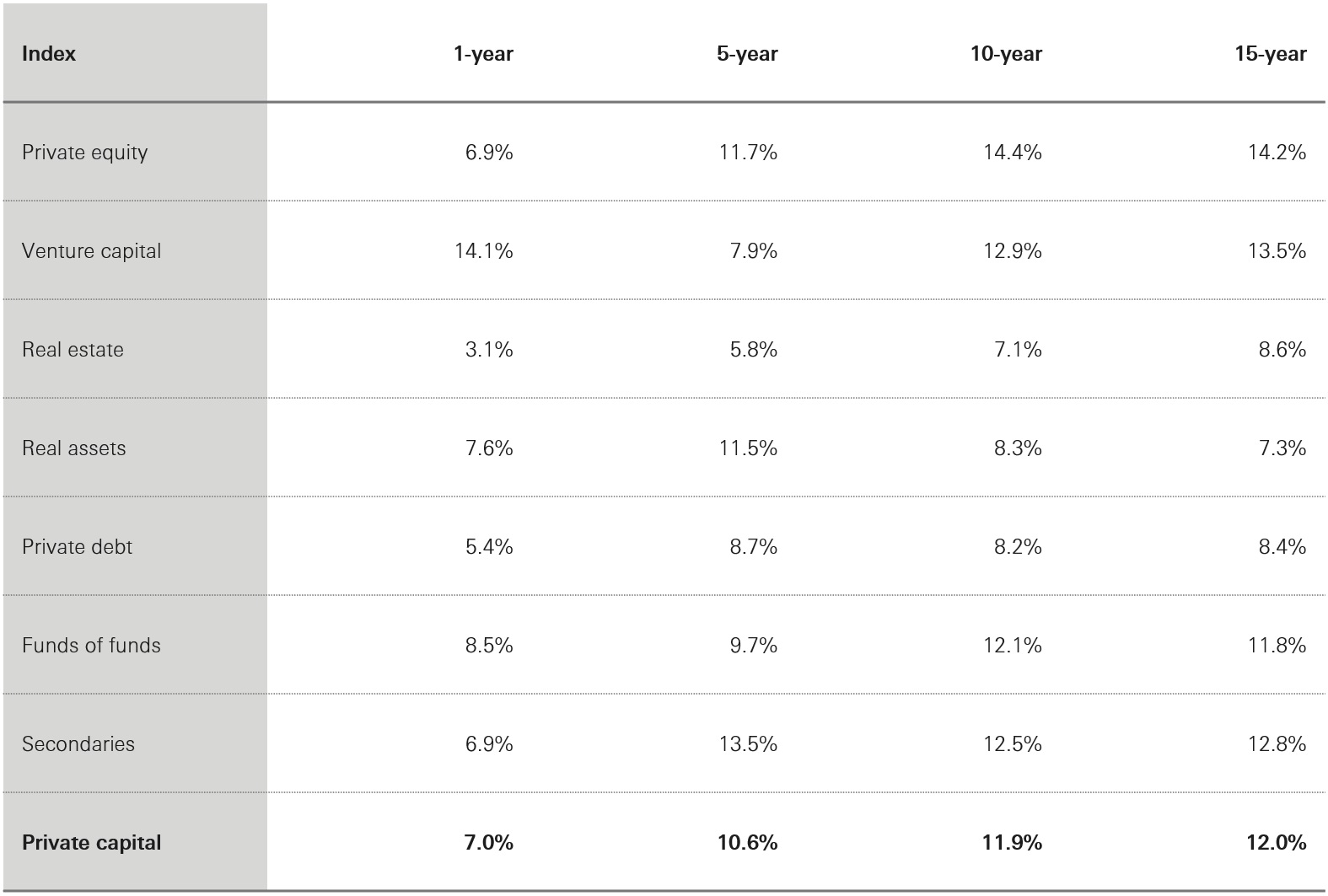
While returns can be volatile over shorter time horizons, VC has historically rewarded patient investors over five, ten, and fifteen-year periods underscoring the importance of a long-term commitment when allocating to VC strategies.
Furthermore, with relatively low correlation to other equity strategies, VC can help diversify an investor’s overall portfolio. There is a high dispersion of returns within VC, making manager selection and portfolio diversification critical for achieving strong outcomes and managing risk.
VC has delivered robust long-term returns
VC has delivered attractive returns, particularly over longer time periods
Figure 7: Private Capital Indexes annualised returns
Click to enlarge
Source: Private capital indexes: Annualised returns’, PitchBook (Q4 2025)
Past performance does not predict future returns. The views expressed above are the views of the author which were held at the time of preparation and are subject to change without notice. This information shouldn’t be constituted as an investment advice.
An opportune time to invest
Venture capital ultimately provides exposure to the future drivers of economic value rather than today’s established markets and mature business models. It offers a degree of ‘futureproofing’ against technological disruption by giving ownership in the companies creating new markets and new business models. Venture capital provides diversification into innovation-led growth value drivers and offers early insight into emerging technological and medical innovations, and management talent.
Venture capital is a growing asset class and provides access to cutting-edge technology and market disruptors while they are in a nascent stage, while PE buyouts typically invest in companies at more mature stage.
Historically, there is little overlap between VC-backed businesses and those backed by private equity firms. As such, it is an important portfolio diversifier as part of a multi-asset portfolio and can generate superior risk-adjusted returns compared to PE buyouts alone.
With an AI-driven super innovation cycle and an improving exit environment, we believe it is an excellent time to invest in VC for investors in search of long-term growth and outsized returns. Nonetheless, venture capital exhibits the widest return dispersion of all private markets asset classes, with top-quartile managers generating returns that are several multiples of the median. Securing access to proven, sought-after GPs is therefore critical to capturing this potential.
Authors
Rudy Kuipers
Investment Associate, Private Markets
Yifei Qian
Principal, Private Markets
Bhaskar Sastry
Head of Alternatives Research
Thibaut Charron
Investment Specialist, Private Markets
Source: PitchBook, data as of December 2025
Past performance does not predict future returns. The views expressed above are the views of the author which were held at the time of preparation and are subject to change without notice. This information shouldn’t be constituted as an investment advice.
Risks of investing in Private Markets
The value of investments and income from them can go down as well as up, meaning you may not get back the amount invested, and you may lose some or all of your investment. Past performance information presented is not indicative of future performance. The return and costs may increase or decrease as a result of currency fluctuations.
- Liquidity Risk: Investors may be unable to dispose of an investment quickly or at all and at a price that’s closely related to recent similar transactions, if any. There is no guarantee of distributions and secondary market to be established
- Event Risk: A significant event may cause a substantial decline in the market value of all securities
- Long-term Horizon: Investors should expect to be locked-in for the full term of the investment, which is subject to extensions
- No Capital Protection: Investors may lose the entirety of invested capital
- Unpredictable Cashflows: Capital may be called and distributed at short notice
- Economic Conditions: Ability to realize/divest from existing investments depends on market conditions and the regulatory environment
- Risk of Forfeiture: Failure to make call payments could result in forfeiture of commitment, including invested capital, without compensation
- Default Risk: In the event of default investors risk losing their entire remaining interest in the vehicle and may be subject to legal proceedings to recover unfunded commitments
- Reliance on Third-party Management Teams: Underlying investments will be managed by various third-party management teams that will in aggregate determine the eventual returns for the investor, if any
- Significant Risk Inherent to Venture Capital Investments: The Fund invests heavily in venture capital managers that invest in companies across the venture capital cycle (from angel and pre-seed, up to late and growth stages) where financial and operating risk is relatively higher due to the less-established nature of those companies. It is difficult to predict their success or market changes, and there can be no assurance that the Fund will be adequately compensated for the risks taken
- Alternative Risk - There are additional risks associated with specific alternative investments within the portfolios; these investments may be less readily realisable than others and it may therefore be difficult to sell in a timely manner at a reasonable price or to obtain reliable information about their value; there may also be greater potential for significant price movements
The risk factors listed above are not exhaustive. Please refer to the official product documentation for the full and detailed risk disclosures.
There can be no assurance that the Fund will be able to implement its investment strategy or meet its targeted returns, diversification or asset allocations. Diversification does not ensure a profit or protect against a loss. The return may increase or decrease as a result of currency fluctuations.
Key risks
- The views expressed above were held at the time of preparation and are subject to change without notice. Any forecast, projection or target where provided is indicative only and is not guaranteed in any way. HSBC Asset Management accepts no liability for any failure to meet such forecast, projection or target
- Alternatives risk: There are additional risks associated with specific alternative investments within the portfolios; these investments may be less readily reliable than others and it may therefore be difficult to sell in a timely manner at a reasonable price or to obtain reliable information about their value; there may also be greater potential for significant price movements
- Equity risk: Portfolios that invest in securities listed on a stock exchange or market could be affected by general changes in the stock market. The value of investments can go down as well as up due to equity markets movements
- Interest rate risk: As interest rates rise debt securities will fall in value. The value of debt is inversely proportional to interest rate movements
- Counterparty risk: The possibility that the counterparty to a transaction may be unwilling or unable to meet its obligations
- Derivatives risk: Derivatives can behave unexpectedly. The pricing and volatility of many derivatives may diverge from strictly reflecting the pricing or volatility of their underlying reference(s), instrument or asset
- Emerging markets risk: Emerging markets are less established, and often more volatile, than developed markets and involve higher risks, particularly market, liquidity and currency risks
- Exchange rate risk: Changes in currency exchange rates could reduce or increase investment gains or investment losses, in some cases significantly
- Investment leverage risk: Investment leverage occurs when the economic exposure is greater than the amount invested, such as when derivatives are used. A Fund that employs leverage may experience greater gains and/or losses due to the amplification effect from a movement in the price of the reference source
- Liquidity risk: Liquidity risk is the risk that a Fund may encounter difficulties meeting its obligations in respect of financial liabilities that are settled by delivering cash or other financial assets, thereby compromising existing or remaining investors
- Operational risk: Operational risks may subject the Fund to errors affecting transactions, valuation, accounting, and financial reporting, among other things
- Style risk: Different investment styles typically go in and out of favour depending on market conditions and investor sentiment
- Model risk: Model risk occurs when a financial model used in the portfolio management or valuation processes does not perform the tasks or capture the risks it was designed to. It is considered a subset of operational risk, as model risk mostly affects the portfolio that uses the model
Important information
For Professional Clients and intermediaries within countries and territories set out below; and for Institutional Investors and Financial Advisors in the US. This document should not be distributed to or relied upon by Retail clients/investors.
The value of investments and the income from them can go down as well as up and investors may not get back the amount originally invested. The performance figures contained in this document relate to past performance, which should not be seen as an indication of future returns. Future returns will depend, inter alia, on market conditions, investment manager’s skill, risk level and fees. Where overseas investments are held the rate of currency exchange may cause the value of such investments to go down as well as up. Investments in emerging markets are by their nature higher risk and potentially more volatile than those inherent in some established markets. Economies in emerging markets generally are heavily dependent upon international trade and, accordingly, have been and may continue to be affected adversely by trade barriers, exchange controls, managed adjustments in relative currency values and other protectionist measures imposed or negotiated by the countries and territories with which they trade. These economies also have been and may continue to be affected adversely by economic conditions in the countries and territories in which they trade.
The contents of this document may not be reproduced or further distributed to any person or entity, whether in whole or in part, for any purpose. All non-authorised reproduction or use of this document will be the responsibility of the user and may lead to legal proceedings. The material contained in this document is for general information purposes only and does not constitute advice or a recommendation to buy or sell investments. Some of the statements contained in this document may be considered forward looking statements which provide current expectations or forecasts of future events. Such forward looking statements are not guarantees of future performance or events and involve risks and uncertainties. Actual results may differ materially from those described in such forward-looking statements as a result of various factors. We do not undertake any obligation to update the forward-looking statements contained herein, or to update the reasons why actual results could differ from those projected in the forward-looking statements. This document has no contractual value and is not by any means intended as a solicitation, nor a recommendation for the purchase or sale of any financial instrument in any jurisdiction in which such an offer is not lawful. The views and opinions expressed herein are those of HSBC Asset Management at the time of preparation and are subject to change at any time. These views may not necessarily indicate current portfolios' composition. Individual portfolios managed by HSBC Asset Management primarily reflect individual clients' objectives, risk preferences, time horizon, and market liquidity. Foreign and emerging markets: investments in foreign markets involve risks such as currency rate fluctuations, potential differences in accounting and taxation policies, as well as possible political, economic, and market risks.
These risks are heightened for investments in emerging markets which are also subject to greater illiquidity and volatility than developed foreign markets. This commentary is for information purposes only. It is a marketing communication and does not constitute investment advice or a recommendation to any reader of this content to buy or sell investments nor should it be regarded as investment research. It has not been prepared in accordance with legal requirements designed to promote the independence of investment research and is not subject to any prohibition on dealing ahead of its dissemination. This document is not contractually binding nor are we required to provide this to you by any legislative provision.
All data from HSBC Asset Management unless otherwise specified. Any third-party information has been obtained from sources we believe to be reliable, but which we have not independently verified.
HSBC Asset Management is the brand name for the asset management business of HSBC Group, which includes the investment activities that may be provided through our local regulated entities. HSBC Asset Management is a group of companies in many countries and territories throughout the world that are engaged in investment advisory and fund management activities, which are ultimately owned by HSBC Holdings Plc. (HSBC Group).
- In Australia, this document is issued by HSBC Bank Australia Limited ABN 48 006 434 162, AFSL 232595, for HSBC Global Asset Management (Hong Kong) Limited ARBN 132 834 149 and HSBC Global Asset Management (UK) Limited ARBN 633 929 718. This document is for institutional investors only and is not available for distribution to retail clients (as defined under the Corporations Act). HSBC Global Asset Management (Hong Kong) Limited and HSBC Global Asset Management (UK) Limited are exempt from the requirement to hold an Australian financial services license under the Corporations Act in respect of the financial services they provide. HSBC Global Asset Management (Hong Kong) Limited is regulated by the Securities and Futures Commission of Hong Kong under the Hong Kong laws, which differ from Australian laws. HSBC Global Asset Management (UK) Limited is regulated by the Financial Conduct Authority of the United Kingdom and, for the avoidance of doubt, includes the Financial Services Authority of the United Kingdom as it was previously known before 1 April 2013, under the laws of the United Kingdom, which differ from Australian laws;
- In Bermuda, this document is issued by HSBC Global Asset Management (Bermuda) Limited, of 37 Front Street, Hamilton, Bermuda which is licensed to conduct investment business by the Bermuda Monetary Authority;
- In France, Belgium, Netherlands, Luxembourg, Portugal, Greece, Finland, Norway, Denmark, Spain and Sweden this document is issued by HSBC Global Asset Management (France), a Portfolio Management Company authorised by the French regulatory authority AMF (no. GP99026);
- In Germany, this document is issued by HSBC Global Asset Management (Deutschland) GmbH which is regulated by BaFin (German clients) respective by the Austrian Financial Market Supervision FMA (Austrian clients);
- In Hong Kong, this document is issued by HSBC Global Asset Management (Hong Kong) Limited, which is regulated by the Securities and Futures Commission. This content has not been reviewed by the Securities and Futures Commission;
- In India, this document is issued by HSBC Asset Management (India) Pvt Ltd. which is regulated by the Securities and Exchange Board of India;
- In Italy, this document is issued by HSBC Global Asset Management (France), a Portfolio Management Company authorised by the French regulatory authority AMF (no. GP99026), through its Italian branch, regulated by Banca d’Italia and Commissione Nazionale per le Società e la Borsa (Consob);
- In Japan, this document is issued by HSBC Asset Management (Japan) Ltd (JRN 3010001124868), regulated by the Financial Services Agency;
- In Malta, this document is issued by HSBC Global Asset Management (Malta) Limited which is regulated and licensed to conduct Investment Services by the Malta Financial Services Authority under the Investment Services Act;
- In Mexico, this document is issued by HSBC Global Asset Management (Mexico), SA de CV, Sociedad Operadora de Fondos de Inversión, Grupo Financiero HSBC which is regulated by Comisión Nacional Bancaria y de Valores;
- In the United Arab Emirates, this document is issued by HSBC Investment Funds (Luxembourg) S.A. – Dubai Branch (Level 20, HSBC Tower, PO Box 66, Downtown Dubai, United Arab Emirates) regulated by the Capital Market Authority (CMA) in the UAE to conduct investment fund management, portfolios management, fund administration activities (CMA Category 2 license No.20200000336) and promotion activities (CMA Category 5 license No.20200000327).
- In the United Arab Emirates, this document is issued by HSBC Global Asset Management MENA, a unit within HSBC Bank Middle East Limited, U.A.E Branch, PO Box 66 Dubai, UAE, regulated by the Central Bank of the U.A.E. and the Capital Market Authority in the UAE under CMA license number 602004 for the purpose of this promotion and lead regulated by the Dubai Financial Services Authority. HSBC Bank Middle East Limited is a member of the HSBC Group and HSBC Global Asset Management MENA are marketing the relevant product only in a sub-distributing capacity on a principal-to-principal basis. HSBC Global Asset Management MENA may not be licensed under the laws of the recipient’s country of residence and therefore may not be subject to supervision of the local regulator in the recipient’s country of residence. One of more of the products and services of the manufacturer may not have been approved by or registered with the local regulator and the assets may be booked outside of the recipient’s country of residence.
- In Singapore, this document is issued by HSBC Global Asset Management (Singapore) Limited, which is regulated by the Monetary Authority of Singapore. The content in the document/video has not been reviewed by the Monetary Authority of Singapore;
- In Switzerland, this document is issued by HSBC Global Asset Management (Switzerland) AG. This document is intended for professional investor use only. For opting in and opting out according to FinSA, please refer to our website; if you wish to change your client categorization, please inform us. HSBC Global Asset Management (Switzerland) AG having its registered office at Gartenstrasse 26, PO Box, CH-8002 Zurich has a licence as an asset manager of collective investment schemes and as a representative of foreign collective investment schemes. Disputes regarding legal claims between the Client and HSBC Global Asset Management (Switzerland) AG can be settled by an ombudsman in mediation proceedings. HSBC Global Asset Management (Switzerland) AG is affiliated to the ombudsman FINOS having its registered address at Talstrasse 20, 8001 Zurich. There are general risks associated with financial instruments, please refer to the Swiss Banking Association (“SBA”) Brochure “Risks Involved in Trading in Financial Instruments”;
- In Taiwan, this document is issued by HSBC Global Asset Management (Taiwan) Limited which is regulated by the Financial Supervisory Commission R.O.C. (Taiwan);
- In Turkiye, this document is issued by HSBC Asset Management A.S. Turkiye (AMTU) which is regulated by Capital Markets Board of Turkiye. Any information here is not intended to distribute in any jurisdiction where AMTU does not have a right to. Any views here should not be perceived as investment advice, product/service offer and/or promise of income. Information given here might not be suitable for all investors and investors should be giving their own independent decisions. The investment information, comments and advice given herein are not part of investment advice activity. Investment advice services are provided by authorized institutions to persons and entities privately by considering their risk and return preferences, whereas the comments and advice included herein are of a general nature. Therefore, they may not fit your financial situation and risk and return preferences. For this reason, making an investment decision only by relying on the information given herein may not give rise to results that fit your expectations.
- In the UK, this document is issued by HSBC Global Asset Management (UK) Limited, which is authorised and regulated by the Financial Conduct Authority;
- In the US, this document is issued by HSBC Securities (USA) Inc., an HSBC broker dealer registered in the US with the Securities and Exchange Commission under the Securities Exchange Act of 1934. HSBC Securities (USA) Inc. is also a member of NYSE/FINRA/SIPC. HSBC Securities (USA) Inc. is not authorized by or registered with any other non-US regulatory authority. The contents of this document are confidential and may not be reproduced or further distributed to any person or entity, whether in whole or in part, for any purpose without prior written permission.
- In Chile, operations by HSBC's headquarters or other offices of this bank located abroad are not subject to Chilean inspections or regulations and are not covered by warranty of the Chilean state. Obtain information about the state guarantee to deposits at your bank or on www.cmfchile.cl;
- In Colombia, HSBC Bank USA NA has an authorized representative by the Superintendencia Financiera de Colombia (SFC) whereby its activities conform to the General Legal Financial System. SFC has not reviewed the information provided to the investor. This document is for the exclusive use of institutional investors in Colombia and is not for public distribution;
- In Costa Rica, the Fund and any other products or services referenced in this document are not registered with the Superintendencia General de Valores (“SUGEVAL”) and no regulator or government authority has reviewed this document, or the merits of the products and services referenced herein. This document is directed at and intended for institutional investors only.
- In Peru, HSBC Bank USA NA has an authorized representative by the Superintendencia de Banca y Seguros in Perú whereby its activities conform to the General Legal Financial System - Law No. 26702. Funds have not been registered before the Superintendencia del Mercado de Valores (SMV) and are being placed by means of a private offer. SMV has not reviewed the information provided to the investor. This document is for the exclusive use of institutional investors in Perú and is not for public distribution;
- In Uruguay, operations by HSBC's headquarters or other offices of this bank located abroad are not subject to Uruguayan inspections or regulations and are not covered by warranty of the Uruguayan state. Further information may be obtained about the state guarantee to deposits at your bank or on www.bcu.gub.uy.
Copyright © HSBC Global Asset Management Limited 2026.
All rights reserved. No part of this publication may be reproduced, stored in a retrieval system, or transmitted, on any form or by any means, electronic, mechanical, photocopying, recording, or otherwise, without the prior written permission of HSBC Asset Management.
Content ID: D072912_v1.0; Expiry Date: 30.07.2027