
HSBC AM's Hedge Fund Strategy Celebrates 30 Years
HSBC Asset Management’s (HSBC AM) flagship fund of funds strategy has just marked 30 years and was first covered by The Hedge Fund Journal in Issue 7, back in 2005, only a year after the publication launched in 2004.
Parent bank HSBC was founded in Hong Kong in 1865, while HSBC AM and its predecessors have been advising on hedge funds since the late 1980s. The team’s longevity is equally notable: Head of Alternative Investment Solutions, William Benjamin, has spent virtually his entire career at the firm.
According to Benjamin, the strategy has delivered resilient performance through some of the most challenging periods for hedge funds and financial markets: “Since inception in 1996, we have remained resilient through the 1998 financial crisis and the collapse of Long-Term Capital Management (LTCM). We also navigated the dot-com boom and bust, as well as the wave of corporate scandals that unfolded between 1999 and 2002”.
Since inception, we have remained resilient through the 1998 financial crisis and the collapse of LTCM. We also navigated the dot-com boom and bust, as well as the wave of corporate scandals that unfolded between 1999 and 2002.
HSBC AM points to its track record of maintaining investor access to liquidity. “We did not gate, suspend or otherwise restrict liquidity during or after the 2008 global financial crisis,” says Benjamin. Some of HSBC AM’s manager relationships have endured for more than 30 years, although allocations are continually reviewed and adjusted. The firm is also prepared to take decisive action when required: “We have reduced or fully exited funds because of due diligence concerns such as concentration risks, or where fund expenses were deemed too high,” says Benjamin.
HSBC AM’s alternatives business currently manages USD 81 billion in assets (as of 31 Dec 2025). Since Benjamin joined in 2001, the firm’s flagship fund of funds strategy’s AUM has risen 20-fold from approximately USD 121 million to USD 2.4 billion as of May 2026, reflecting performance and the evolution of the business. Over the same period, global hedge fund industry assets have grown tenfold, from roughly USD 500 billion to USD 5 trillion.
As both the business and the hedge fund industry have evolved, so too has Benjamin’s role: “My role has broadened with the business and the industry. Investors are now hungrier for information and transparency. It is a privileged position to work with sophisticated institutional and private clients, investing with some of the world’s best investment managers”. Relationships with clients go beyond hedge funds to encompass a broader range of asset classes and strategies: “We provide long-term investment solutions, with hedge funds forming one part of our partnership with clients and fund managers,” says Benjamin.
Internal clients remain an important part of the investor base, reflecting the prominent role that private clients played in the early years of the hedge fund industry. As the industry became increasingly institutionalised, HSBC AM’s client mix evolved alongside it and now includes leading institutions as well as third-party clients. “We support them all in different ways to deliver investment solutions and make sure we fulfil our responsibilities around due diligence, fiduciary care, transparency, reporting and capacity,” says Benjamin.
Most delegate investment decisions to HSBC AM through discretionary products or bespoke mandates. The business also manages advisory mandates where HSBC AM investment advisers and portfolio managers work in collaboration with clients to aid them with their own decisions. Bespoke or advisory mandates could consider single strategy funds run by other parts of HSBC AM (which have been recognised by The Hedge Fund Journal’s UCITS Hedge awards), but HSBC AM’s comingled products do not allocate to affiliated single funds.
DD, data, AI and human decisions
As the industry has evolved, matured and institutionalised, the quantum, breadth and depth of data have changed beyond recognition. Investment due diligence (IDD) and operational due diligence (ODD) have correspondingly expanded enormously over the past three decades. “The complexity and volume of data have grown with the industry, and the firms that we invest with are now much more complex than the two or three people shops that were common in the early years. We spend much more time on ODD as the granularity and rigour of our processes have increased and investors now demand more transparency from managers and counterparties. Our philosophy has not changed, but there is now much more information available to analyse,” explains Benjamin.
HSBC AM created a separate function for ODD in 2006, a few years before this type of segregation became more widely adopted after the GFC revealed weaknesses in some firms’ processes. “We hired a new ODD team who report to me and have other lines of reporting for risk management. I additionally manage the IDD, portfolio management teams and investment specialists on the business development side,” says Benjamin. The latter include Tim Gascoigne who helped to develop the multi-manager business between 1996 and 2012 before rejoining in 2022. Several other key staff have returned to the fold following periods elsewhere in the industry.
Processes use technology but are ultimately discretionary. “AI is being used throughout to expedite all aspects of the due diligence process and free up more time to increase efficiency. But we cannot use AI to automate decision making, which remains a human process,” clarifies Benjamin. This is clearly not a “robo-adviser” or “digital adviser” in a people business where personal relationships matter.
Fees and the role of pod shops
Benjamin notes the wide dispersion in hedge fund fees and says the ODD team is sometimes involved in fee negotiations: “We need to agree fee structures that work for us and for managers, who may or may not accept our proposals”.
Clients are asking HSBC AM to opine on the ongoing debates around multi-manager pod shops, single strategy funds and their typical fee levels and structures. HSBC AM has for many years allocated to some “pod shops” that can have high headline costs and fees. “Our real focus is on the fee load, alpha share and net returns to clients. The overall risk/return make up and ability to access different sources of alpha through the scale and scope of their businesses is attractive. We can access more alpha streams through a multi-strategy firm than we would want to through single strategies,” says Benjamin. For example, HSBC AM sometimes prefers to access more complex and volatile strategies – such as strategic risk transfer (SRT) or insurance linked securities (ILS) – via multi-strategy vehicles rather than pure play funds.
Benjamin equally appreciates that some talented people prefer to run their own firms: “There is a role and place for both multi-strategy and single strategy firms and our process is consistently applied to both. We dig deep into them to understand the transparency and alpha generation of platforms and portfolios and take a view on the persistency of their returns”.
At the other end of the fee spectrum, HSBC AM is not currently allocated to Quantitative Investment Strategy (QIS) products, which are used by many of the largest hedge funds, nor ETFs. However, it would “never say never” if there were client demand. “Ultimately clients look for the best risk/return in the hedge fund universe. Should client needs change we would listen to them if it is appropriate,” says Benjamin.
Our philosophy has not changed, but there is now much more information available to analyse.
Vigilant on mismatches
Some sought after groups, particularly multi-strategy funds, have introduced much longer lock-ups and attracted more stable pools of capital. Benjamin exercises judgement when assessing whether liquidity terms are appropriate for different mandates: “We understand the rationale for longer lock-ups, because managers need a stable capital base to run certain strategies. That said, we do challenge managers where we feel the terms may not be appropriate for the underlying strategy. Longer lock-ups are not suitable for our flagship strategy, which offers monthly liquidity, though some other client portfolios may be able to accommodate them”.
Manager selection is paramount
The flagship product is not strictly market neutral and has around 20 per cent weighted average equity beta that makes a modest contribution to returns in most years. But alpha is the main driver of performance and manager selection has been a major driver of HSBC AM’s outperformance of hedge fund indices, according to Benjamin.
The strategy typically holds around 30 holdings, ranging from well-known managers to smaller positions in newer managers. Most of the managers, including many legends and luminaries of the industry, manage billions and have track records of between 10 to 30 years. The largest positions can reach 10 per cent.
There are typically one or two emerging managers within the portfolio, often among the larger launches, such as spinouts from established firms, with allocations of around 1-2 per cent each. HSBC AM has, on occasions, invested from day one. “We may invest early if warranted, but in other cases we prefer to monitor new firms for a period before committing capital,” points out Benjamin.
HSBC AM does not generally seed managers or take equity stakes or revenue-sharing arrangements. However, it will seek to take advantage of early-bird share classes where available.
“We could also build a custom portfolio of emerging managers if clients wanted it. But all new managers still must pass the same rigorous due diligence processes,” stresses Benjamin.
Dynamic and tactical moves
Though most of the returns come from buying and holding top tier managers, HSBC AM does vary allocations somewhat and will occasionally make tactical wagers. “We may tilt or modulate the portfolio towards or away from some strategies or managers. We have sometimes varied the balance between longer-term and shorter-term CTAs and changed the composition in terms of the markets traded,” says Benjamin. “For instance, during the Covid crisis in March 2020, we made a tactical call increasing credit directionality and took profits on the additional exposure about a year later. This position, sized around 5 per cent, was the biggest change we made in recent years.” The firm did not add to credit at the end of 2022.
Meanwhile, the underlying managers are also making their own dynamic strategy evolutions and shifts. While multi-strategy funds are best known for market-neutral and low-net equity long/short strategies, including sector-specialist books, many have also become major players in macro, commodities, and quantitative investing.
Outlook
The past six years have been widely regarded as a golden period for hedge fund returns, with leading multi-manager portfolios and multi-strategy hedge funds delivering annualised low double-digit returns alongside low correlation to traditional asset classes.
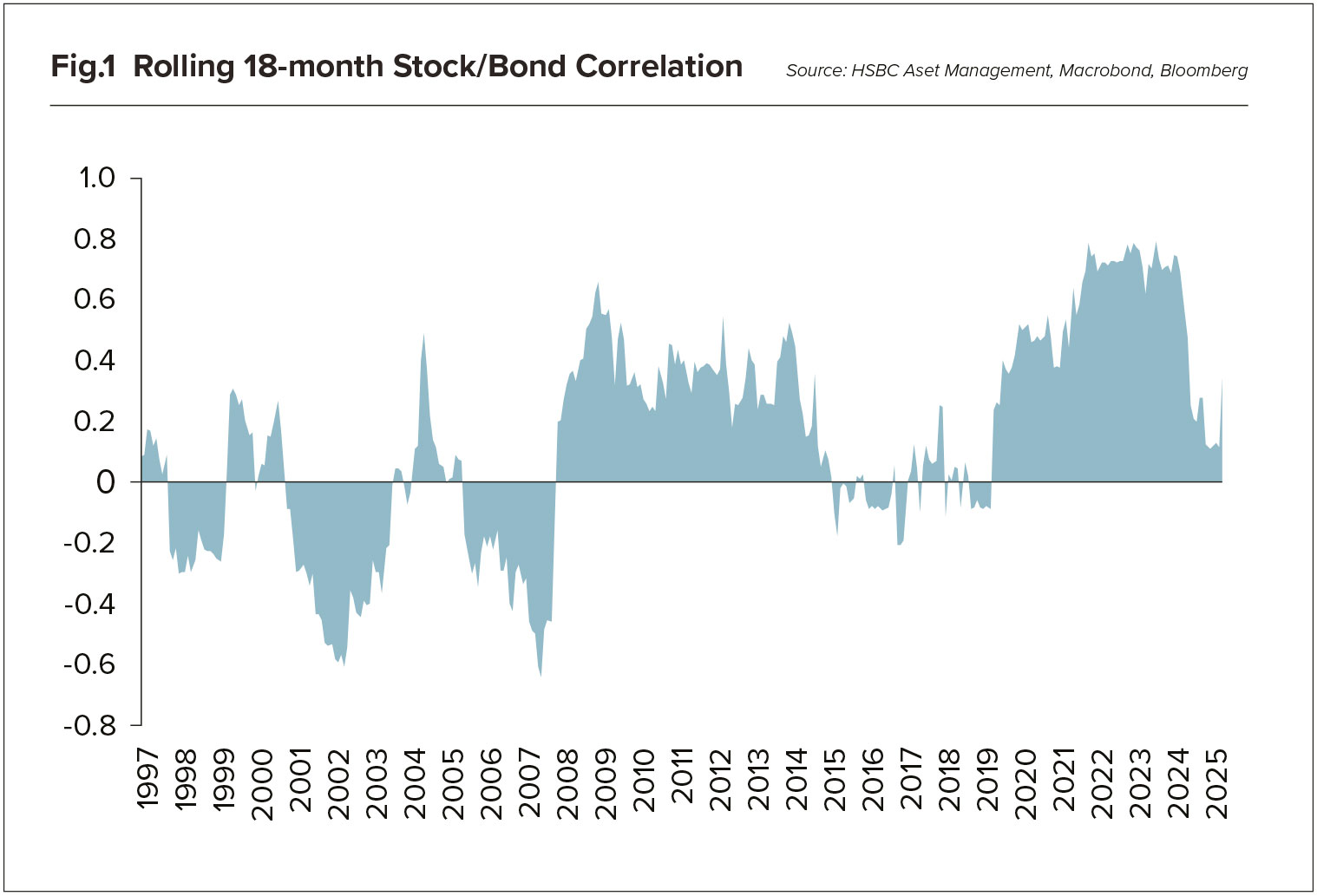
The normalisation of interest rates and yield curves, policy divergence, and greater dispersion within and between equity markets and sectors have significantly expanded the opportunity set for both discretionary and quantitative hedge fund strategies. Elevated volatility has also provided fertile conditions for managers to generate returns. At the same time, periods of positive stock-bond correlation have challenged the traditional 60/40 portfolio, increasing investor focus on additional sources of diversification.
Click the image to enlarge
Benjamin highlights interest rates as a key reason for his constructive outlook: “When rates were zero, volatility was compressed. Interest rates are not going back down to zero. This is a cash plus industry in terms of returns”.
The firm continues to see good inflows across the board from wealth channels and institutions as many allocators, consultants and advisers increase their target weightings for hedge funds and alternatives.